





BIKEPACKING IN CHINA
EXPLORING THE COUNTRY BY BIKE
When EVOC's long-standing manufacturing partner for our renowned bike travel bags and new bikepacking collection opened a new production facility in China's Guangxi province, EVOC Product Manager Tobias Reischle took the opportunity to visit. What better way to explore this extraordinary landscape than by bikepacking through it?
RIDE 1
THE RIVER
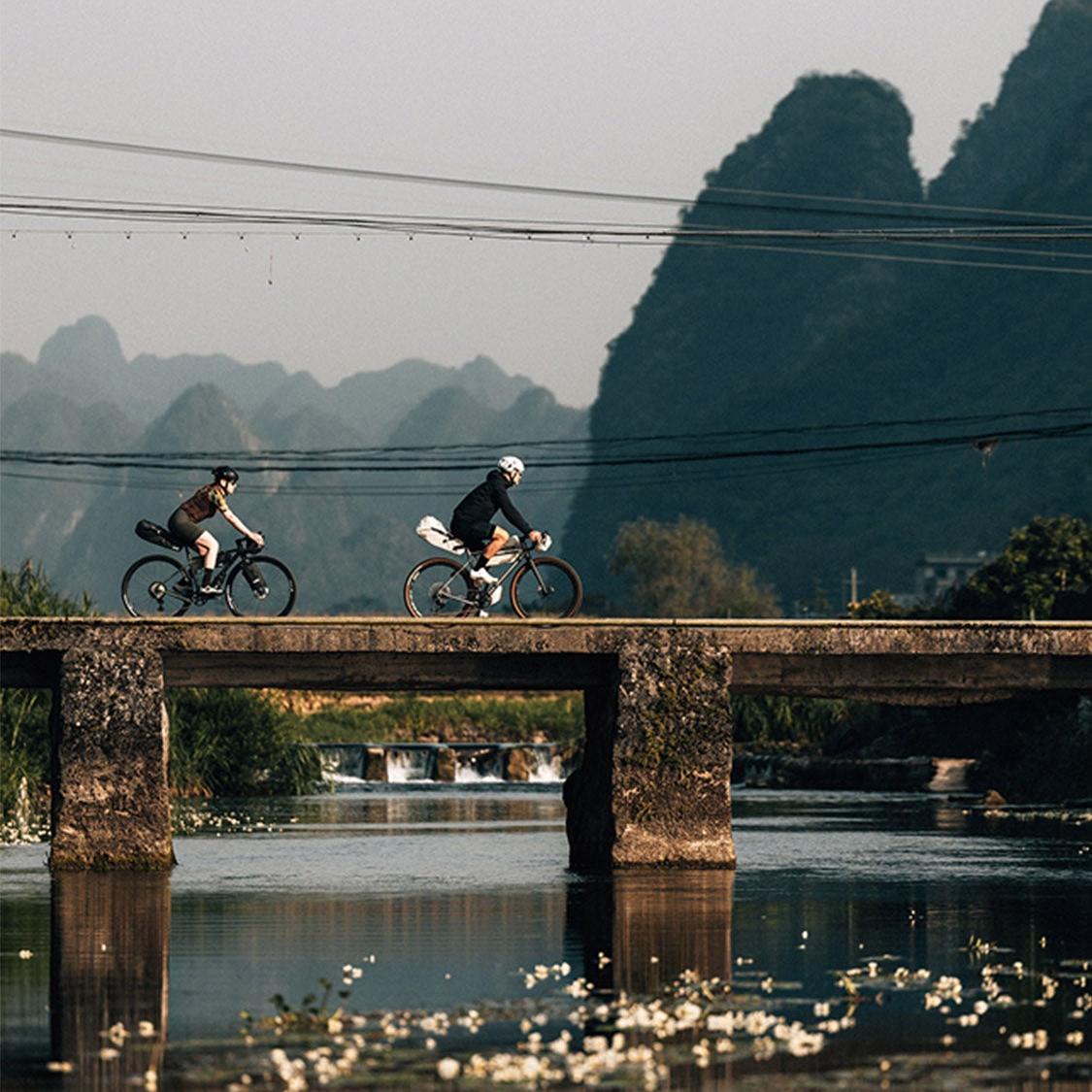
An emerald-green river that disappears beneath the limestone mountains, only to reappear kilometres later.
RIDE 2
THE VALLEY
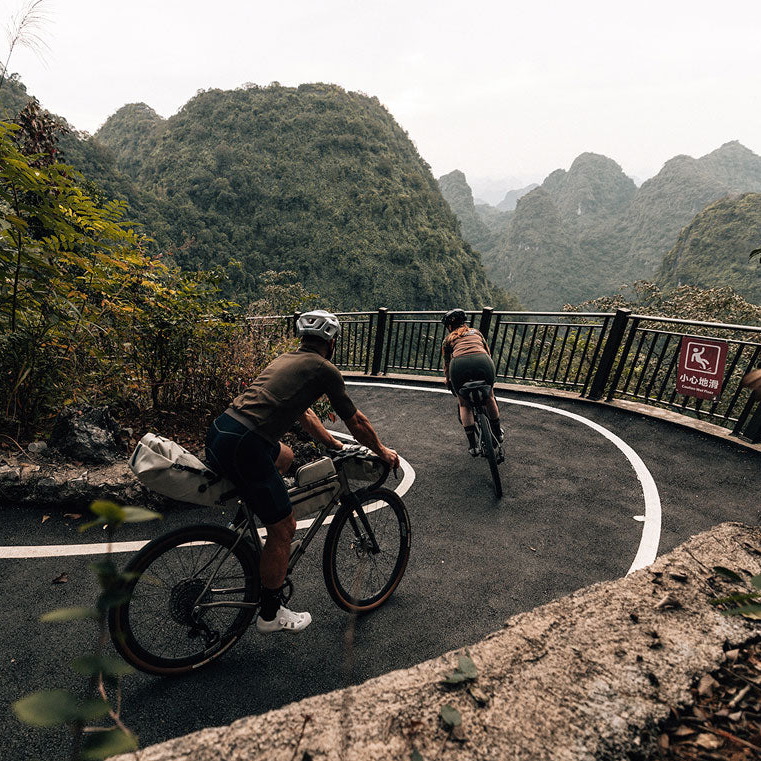
Endless green valleys, quiet roads, and a landscape unlike anything we know from Europe.
RIDE 3
THE PASS
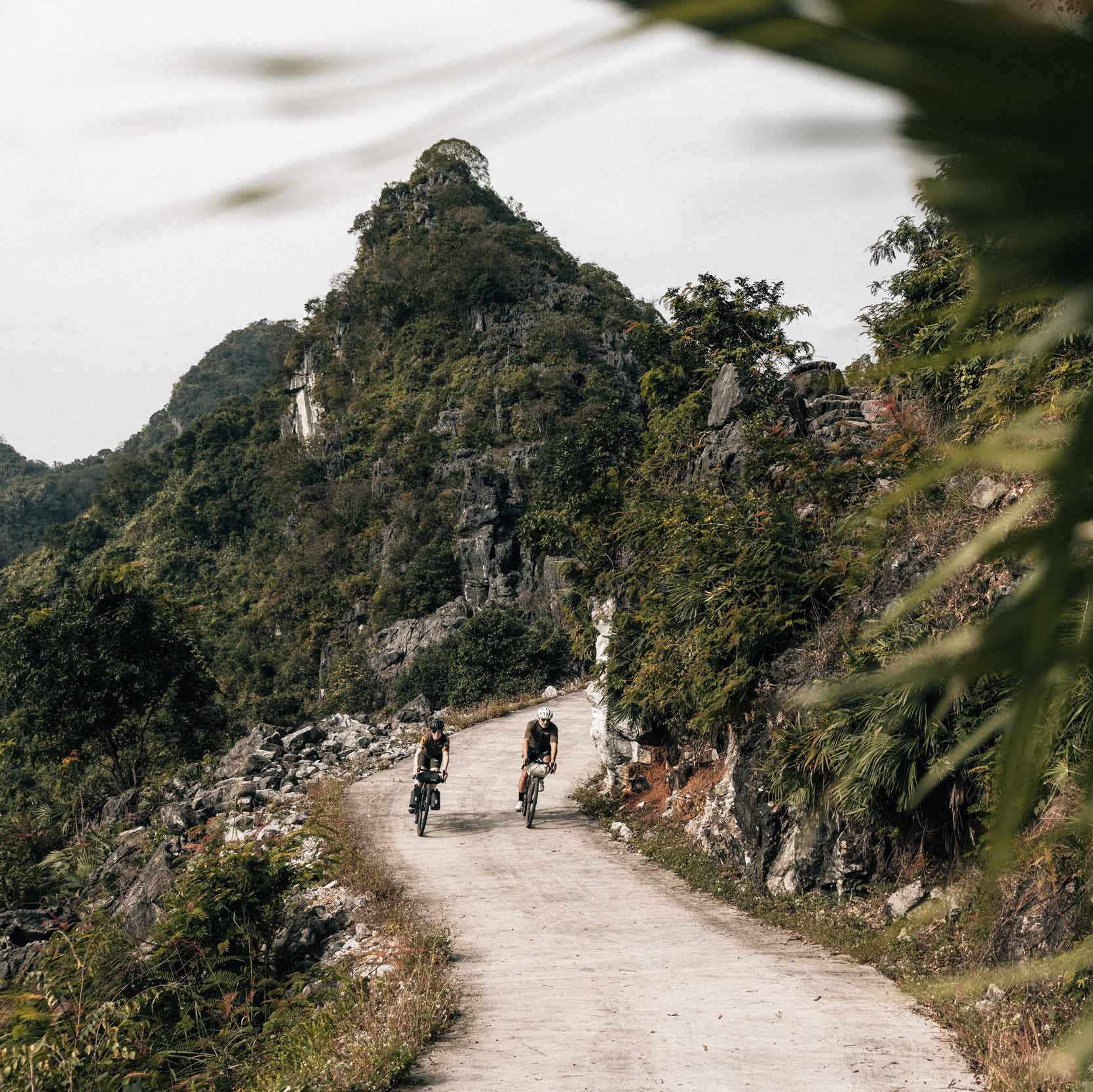
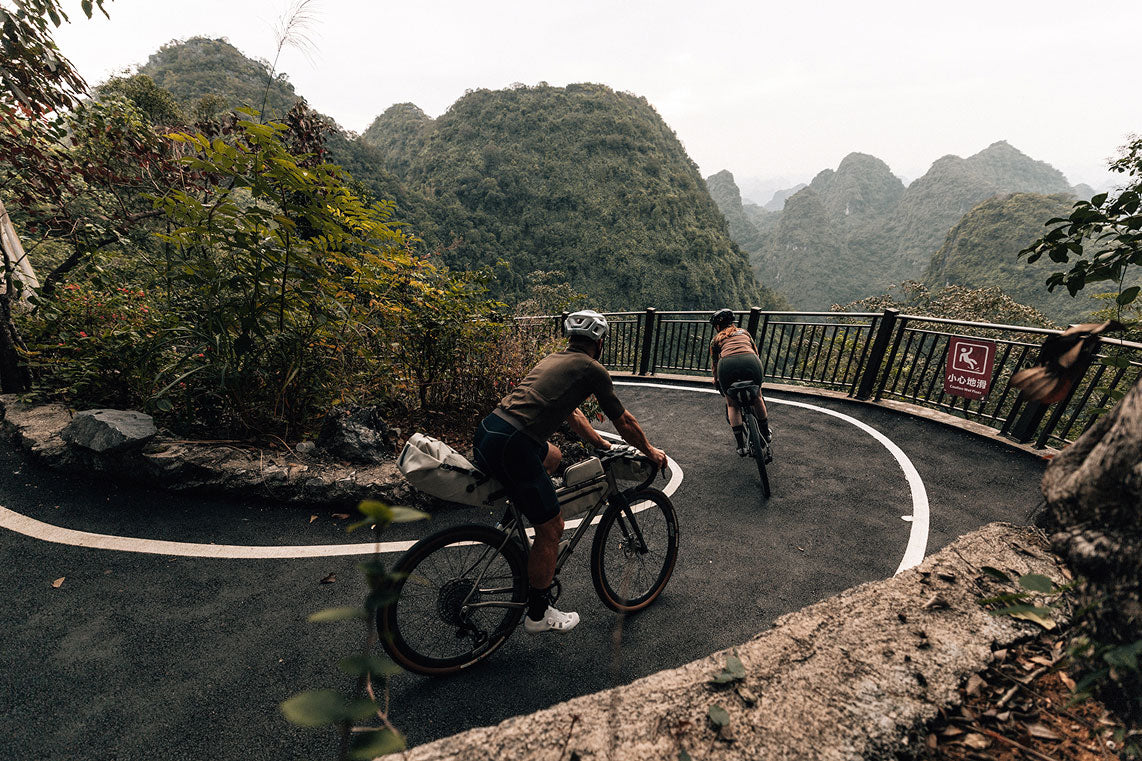
Climbing higher and higher until the Valley of a Million Peaks unfolds beneath us.
DU’AN – IN THE HEART OF GUANGXI
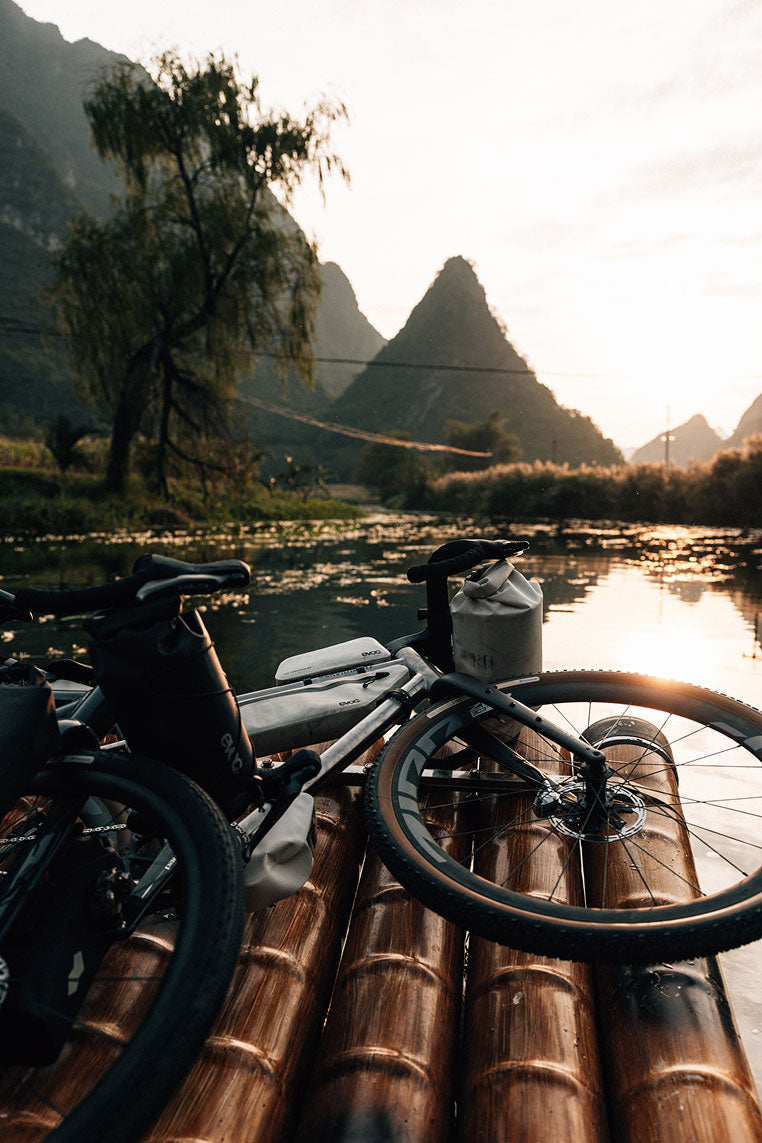
Guangxi, an autonomous region in southwestern China near the Vietnamese border, is famous for its dramatic karst landscape: thousands of cone-shaped limestone peaks rising from lush green valleys. It is breathtaking, unique, and unlike anything we know from Europe.
Together with my partner Kathi, I came here to explore this remarkable region by bike. Peak after peak. Valley after valley.
Michael – the nephew of the factory owner and genuinely one of the kindest people you could meet – and René, EVOC's Quality Manager, had scouted parts of the area beforehand. There was a good reason for that: GPS navigation here can be surprisingly unreliable. Despite 5G coverage reaching even the most remote mountain roads, location data is often inaccurate. You might be standing on a busy main road while your device places you two kilometres away on a mountain pass. Roads suddenly disappear from digital maps, even though they continue all the way to the next village.
So we rode the old-fashioned way: following our instincts, trusting that every road leading into a valley and up a mountain would eventually find its way back down. Navigating by sight. Exploring in its purest form.
You could spend weeks riding through this landscape. We started with three unforgettable days.
RIDE 1
THE RIVER
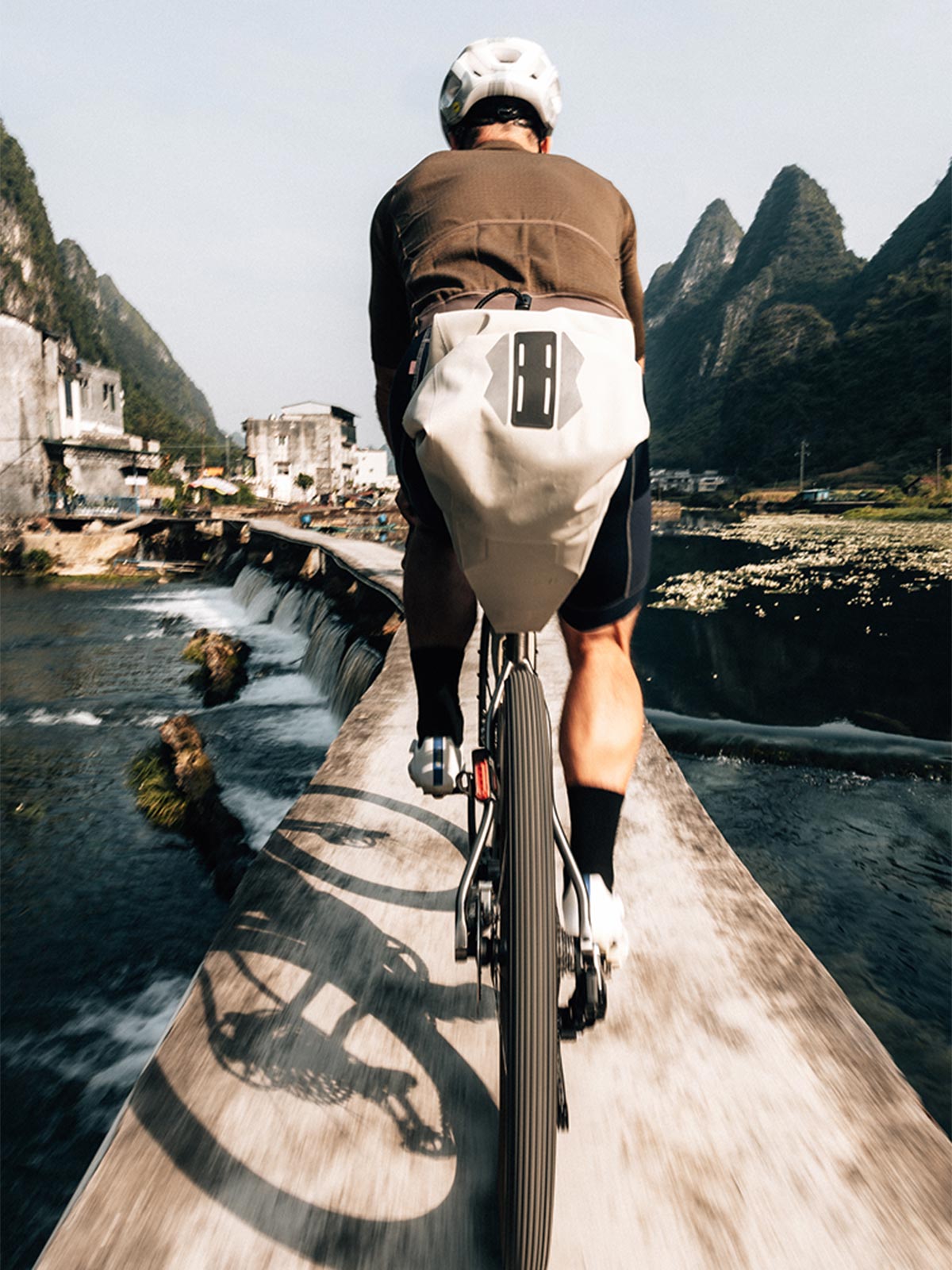
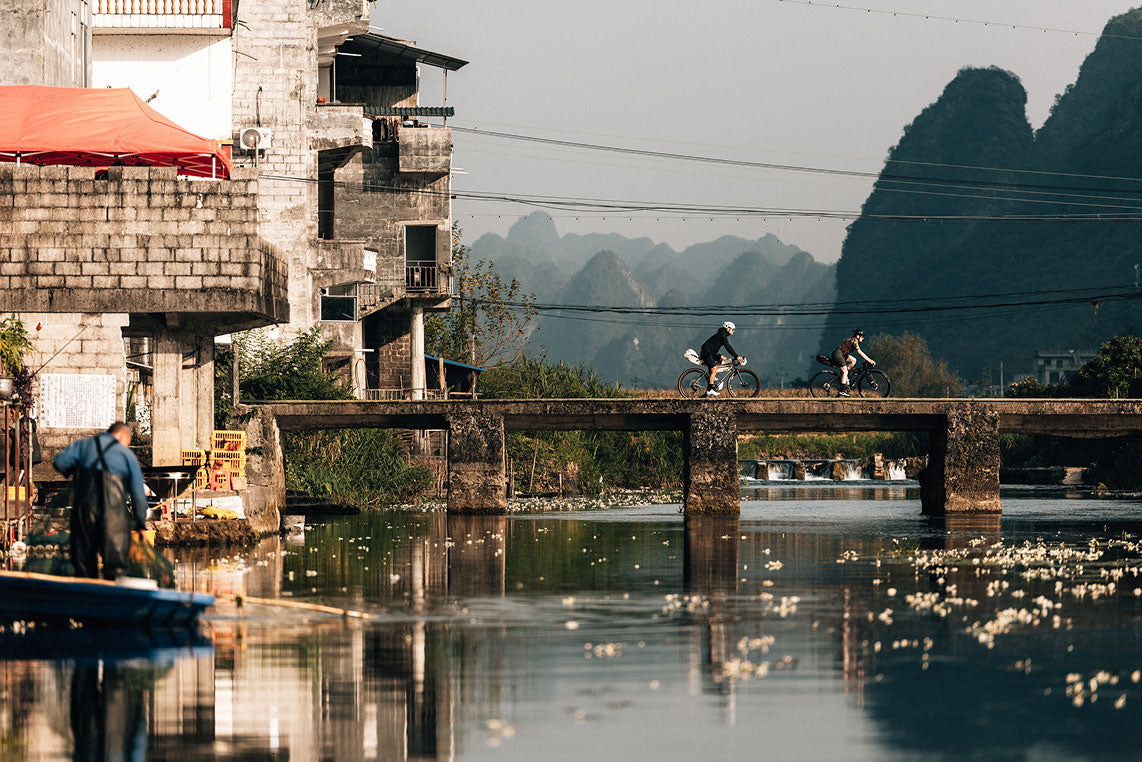
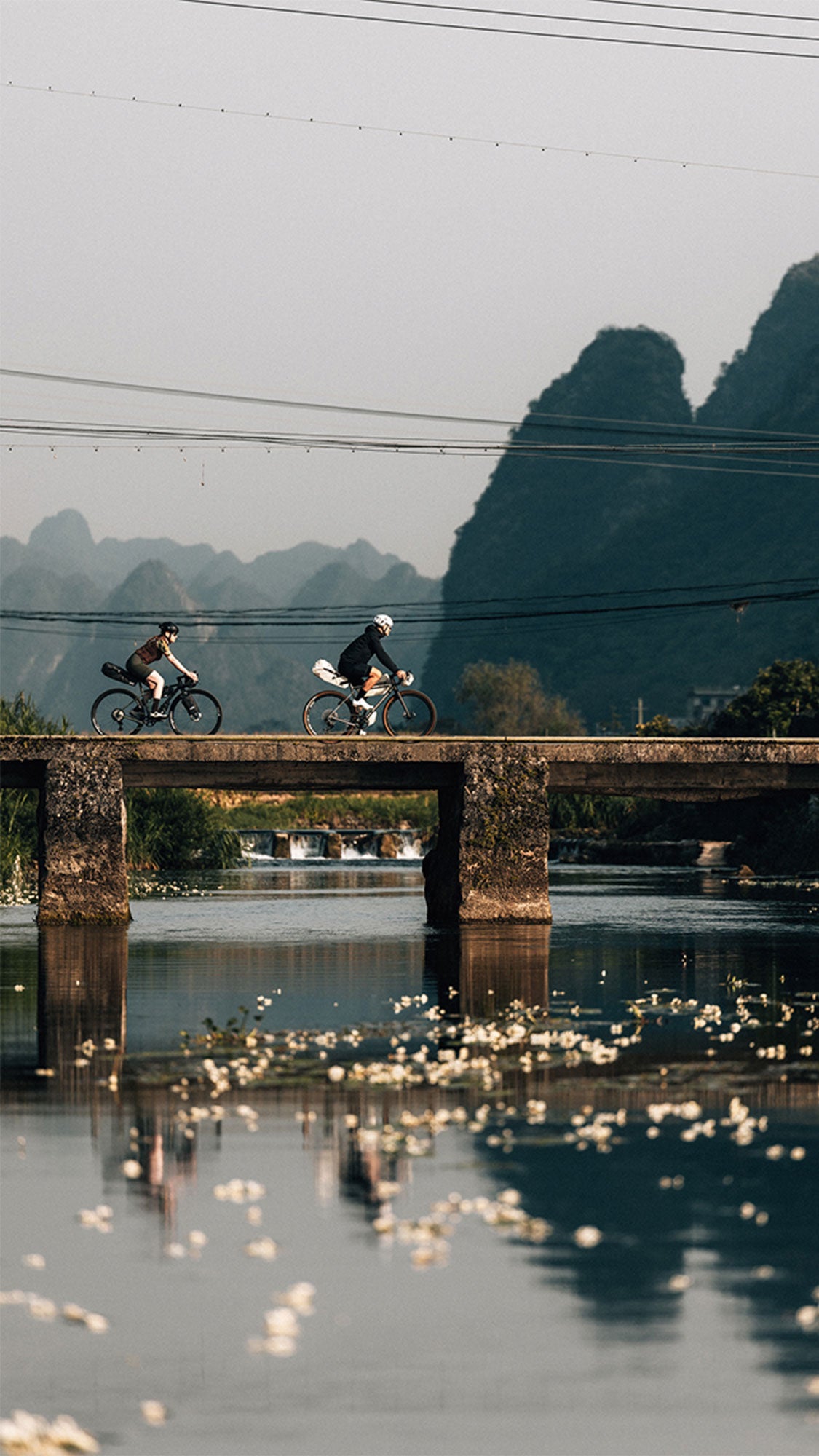
We pedal along the riverbank until, quite suddenly, the river disappears underground. Not because it dries up, but because it continues flowing beneath the limestone mountains before resurfacing kilometres later. Standing beside it feels as though you've found its source all over again. Fresh. Cold. Incredibly clear.
Swimming here feels like stepping into a fountain of youth. We ask the ferryman who takes us across the river, "Where does the river go when it disappears underground? And how far does it travel?"
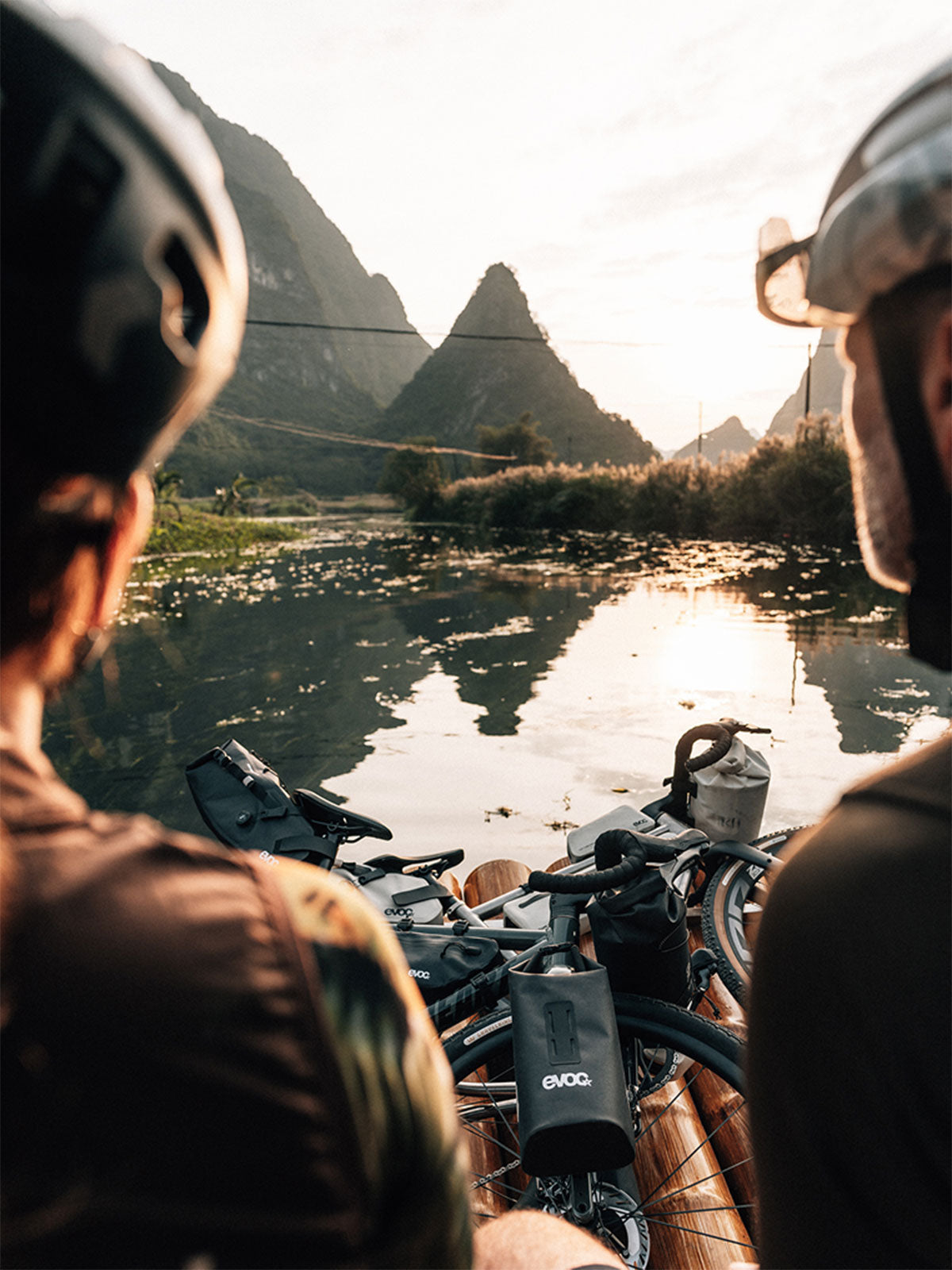
His answer is a smiling shrug. His wife, washing freshly plucked ducks on the riverbank, smiles just as warmly. The fisherman in the neighbouring boat waves cheerfully in our direction.
The people here are extraordinarily friendly, curious, and welcoming. Locals ask for selfies because they've never met a European visitor in this province. If you ask for directions, they pull out their phones, speak a few sentences in Mandarin, and hand you the translated text to read.
It works. Everywhere. Technology becomes a bridge between cultures.
We pedal along the riverbank until, quite suddenly, the river disappears underground. Not because it dries up, but because it continues flowing beneath the limestone mountains before resurfacing kilometres later. Standing beside it feels as though you've found its source all over again. Fresh. Cold. Incredibly clear.
Swimming here feels like stepping into a fountain of youth. We ask the ferryman who takes us across the river, "Where does the river go when it disappears underground? And how far does it travel?"
His answer is a smiling shrug. His wife, washing freshly plucked ducks on the riverbank, smiles just as warmly. The fisherman in the neighbouring boat waves cheerfully in our direction.
The people here are extraordinarily friendly, curious, and welcoming. Locals ask for selfies because they've never met a European visitor in this province. If you ask for directions, they pull out their phones, speak a few sentences in Mandarin, and hand you the translated text to read.
It works. Everywhere. Technology becomes a bridge between cultures.
So we rode the old-fashioned way: following our instincts, trusting that every road leading into a valley and up a mountain would eventually find its way back down. Navigating by sight.
RIDE 2
THE VALLEY
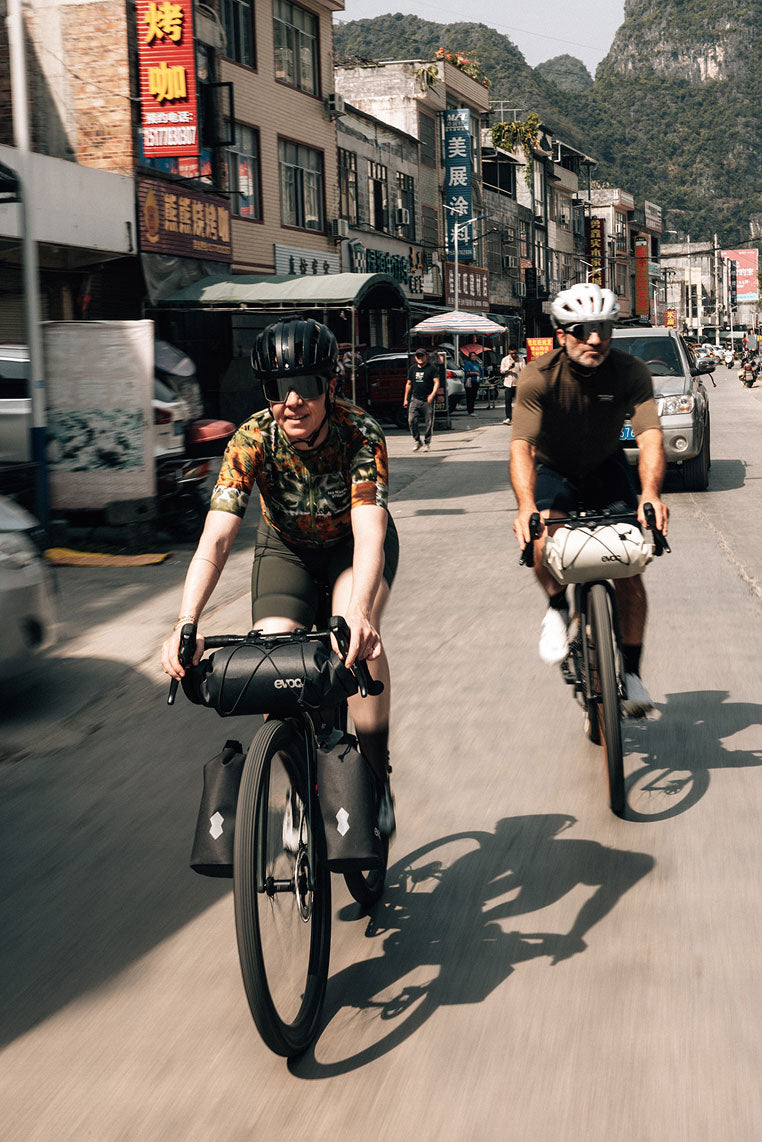
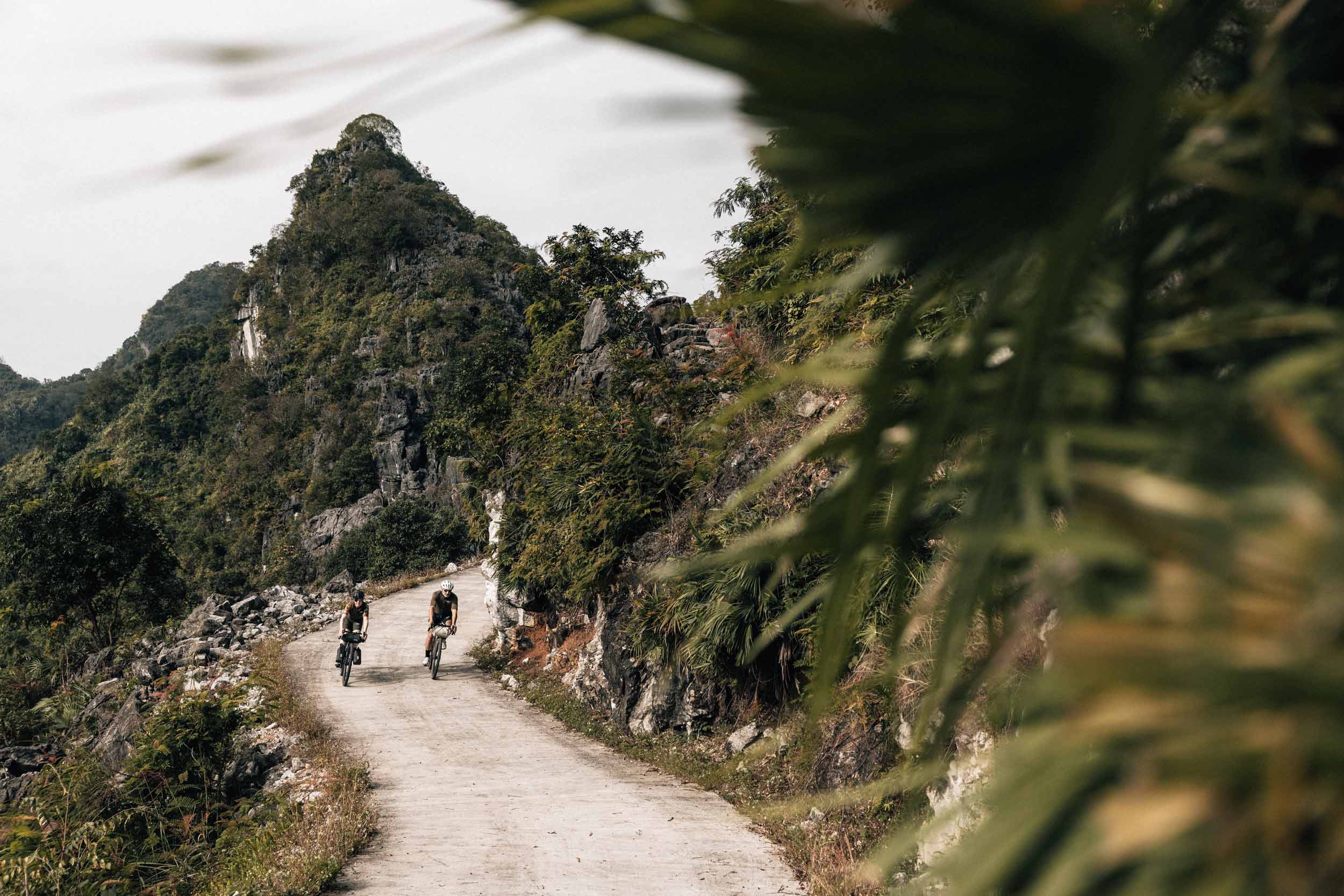
There is simply nothing like this in Europe. It feels entirely different, entirely unique. Between the endless green hills, roads weave their way through the valleys. Many of these roads are newly paved, replacing what were recently gravel tracks, as locals tell us. Guangxi is evolving rapidly.
For us, it's ideal riding terrain. Smooth roads. Hardly any traffic. And occasionally, surprisingly, official cycling paths.
Cycling itself still feels somewhat unusual here. During our entire trip, we encountered no other cyclists. Not one.
In many parts of China, prosperity has traditionally meant leaving the bicycle behind in favour of four wheels – increasingly electric ones. Bikepackers are still regarded as fascinating outsiders.
Farmhouses dot the valleys on either side of the road. And even the smallest farms are connected to the road network with paved access roads. By "small farm," I mean truly remote, self-sufficient family farms.
In front of nearly every house stands an electric vehicle, powered by photovoltaic panels mounted on the rooftops. Agricultural drones buzz over the surrounding fields. Yet many of the buildings remain unfinished, their brick walls unplastered. China often feels like a place where tradition and the future coexist side by side.
There is simply nothing like this in Europe. It feels entirely different, entirely unique. Between the endless green hills, roads weave their way through the valleys. Many of these roads are newly paved, replacing what were recently gravel tracks, as locals tell us. Guangxi is evolving rapidly.
For us, it's ideal riding terrain. Smooth roads. Hardly any traffic. And occasionally, surprisingly, official cycling paths.
Cycling itself still feels somewhat unusual here. During our entire trip, we encountered no other cyclists. Not one.
In many parts of China, prosperity has traditionally meant leaving the bicycle behind in favour of four wheels – increasingly electric ones. Bikepackers are still regarded as fascinating outsiders.
Farmhouses dot the valleys on either side of the road. And even the smallest farms are connected to the road network with paved access roads. By "small farm," I mean truly remote, self-sufficient family farms.
In front of nearly every house stands an electric vehicle, powered by photovoltaic panels mounted on the rooftops. Agricultural drones buzz over the surrounding fields. Yet many of the buildings remain unfinished, their brick walls unplastered. China often feels like a place where tradition and the future coexist side by side.
RIDE 3
THE PASS
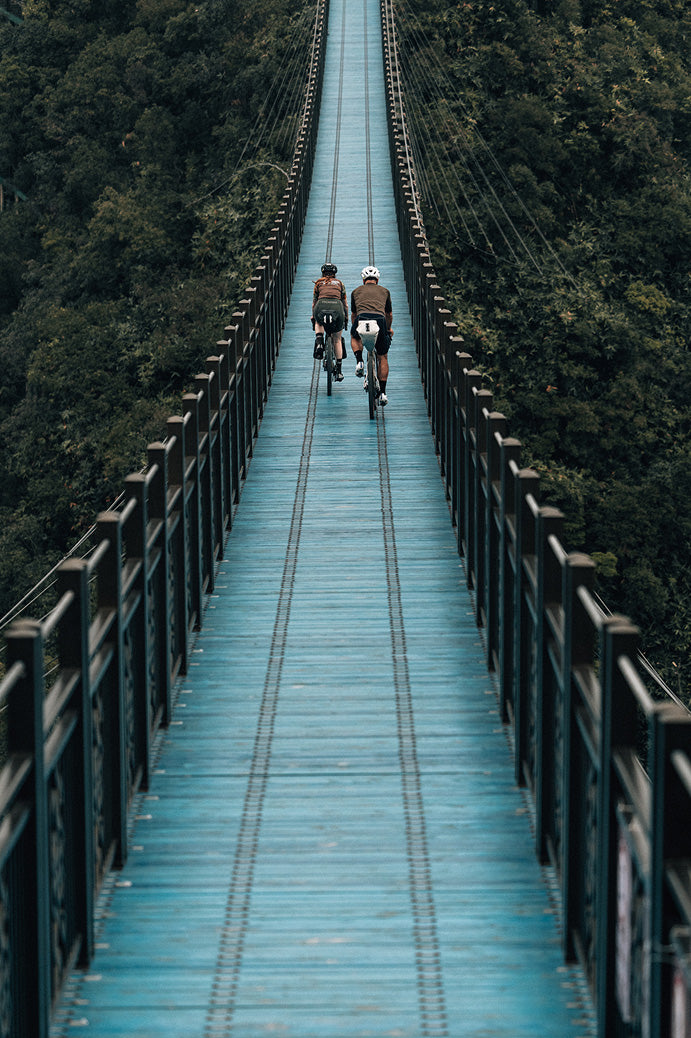
The Valley of a Million Peaks.
Riding here is a constant rhythm of climbing and descending.
Two hundred metres up. Fifty down. Three hundred up. One hundred down.
Eventually, we stop counting.
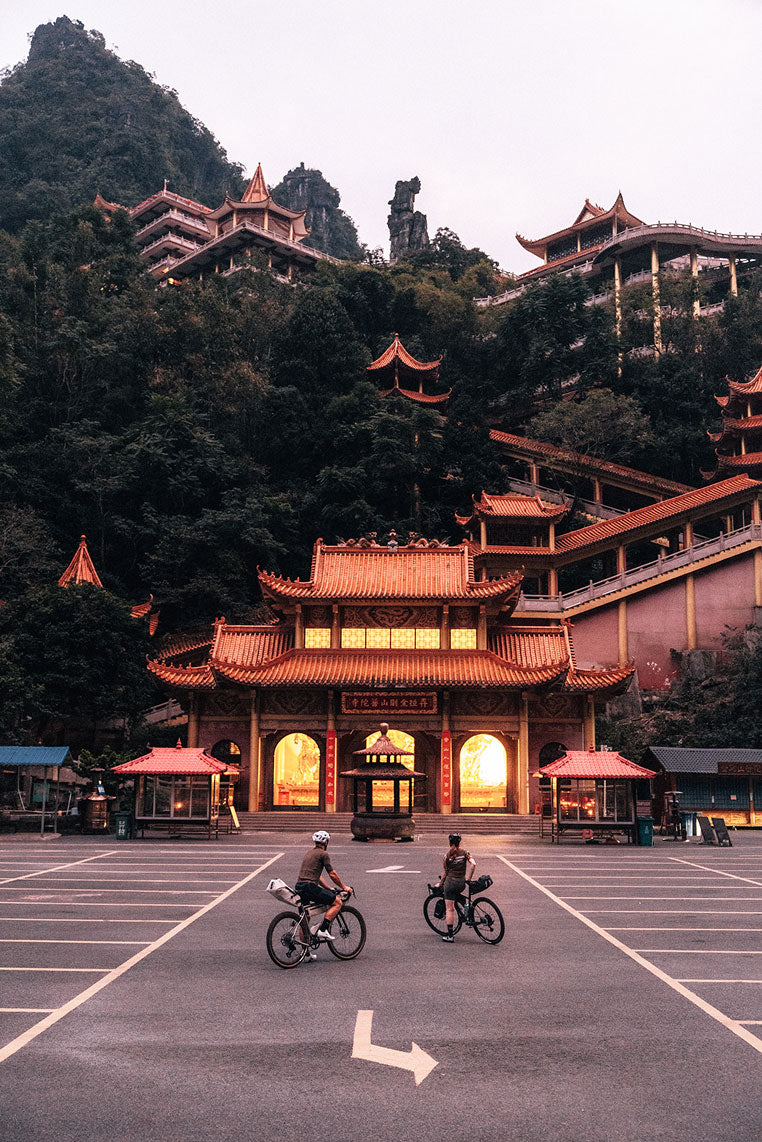
Our goal is clear: a temple perched roughly 500 vertical metres above us on the mountain pass.
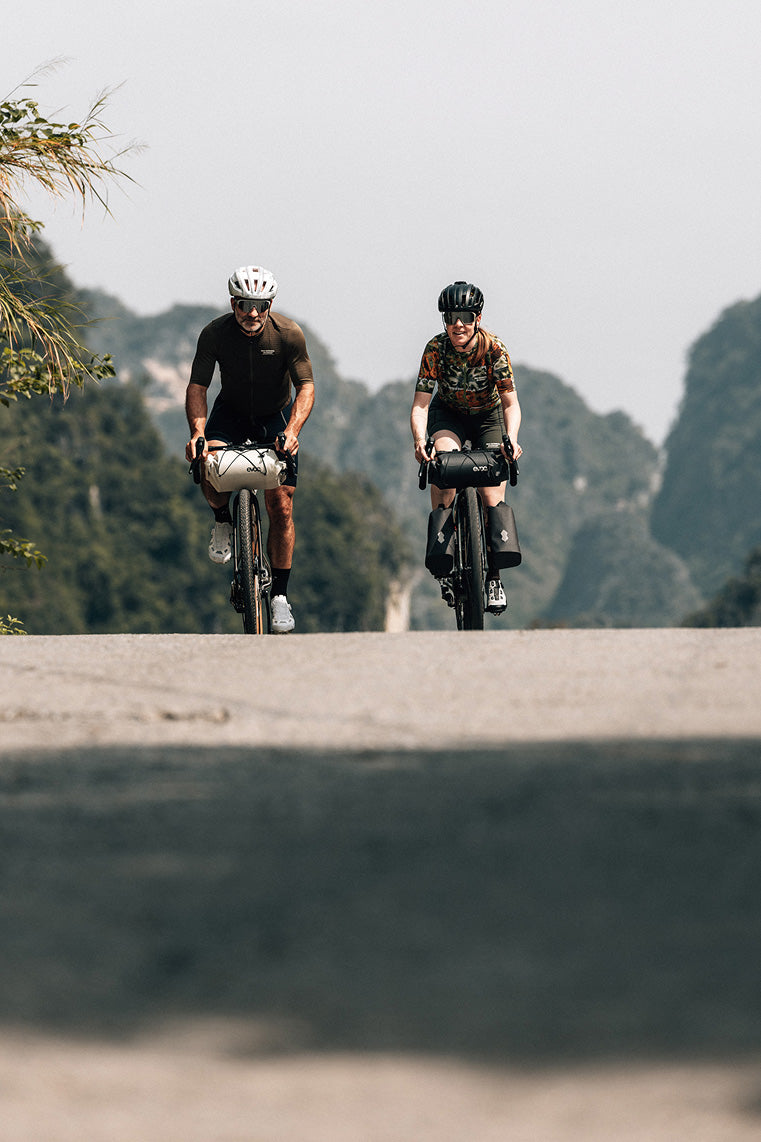
Then, unexpectedly, we spot roadside signs bearing Chinese characters alongside an English translation:
Tour of Guangxi – UCI WorldTour.
Here? In this remote corner of China? Apparently, professional cyclists also know where the beautiful roads are.
Finally, we reach the pass and gaze across the landscape unfolding below us.
Now we understand the name. The Valley of a Million Peaks.
Endless green hills stretching to the horizon. Moments like these remind us why we love bikepacking so much. The places it allows us to experience are extraordinary.
The Valley of a Million Peaks.
Riding here is a constant rhythm of climbing and descending.
Two hundred metres up. Fifty down. Three hundred up. One hundred down.
Eventually, we stop counting.
Our goal is clear: a temple perched roughly 500 vertical metres above us on the mountain pass.
Then, unexpectedly, we spot roadside signs bearing Chinese characters alongside an English translation:
Tour of Guangxi – UCI WorldTour.
Here? In this remote corner of China? Apparently, professional cyclists also know where the beautiful roads are.
Finally, we reach the pass and gaze across the landscape unfolding below us.
Now we understand the name. The Valley of a Million Peaks.
Endless green hills stretching to the horizon. Moments like these remind us why we love bikepacking so much. The places it allows us to experience are extraordinary.
ENDLESS GREEN HILLS STRETCHING TO THE HORIZON.
FRIENDSHIP AND SHARED RESPONSIBILITY – WHERE EVOC PRODUCTS ARE MADE
"Since the very beginning of EVOC, we've chosen to work with the world's best manufacturers – not the cheapest ones. For us, only the highest level of quality matters.
For bags and backpacks, this expertise is found in Asia, where decades of know-how, highly skilled employees, and state-of-the-art machinery come together.
Our manufacturing partners have grown alongside us, and we have grown with them. Together, we drive innovation and continuously develop new ways of building better products.
Our partner in Guangxi is a family-owned company that has been producing bags for EVOC since day one – for almost twenty years. What connects us today goes far beyond business. It is a long-standing friendship.
For many years, their factory was located in the heart of the Pearl River Delta, often referred to as the 'workshop of the world' and one of the largest manufacturing regions on the planet. However, many of their employees originally come from Guangxi Province. The family therefore decided to establish a new production site closer to their homes.
Employees are now able to live nearer to their families, benefiting from a higher quality of life. For us, this is what responsibility towards people truly means."
Holger Feist, Founder of EVOC


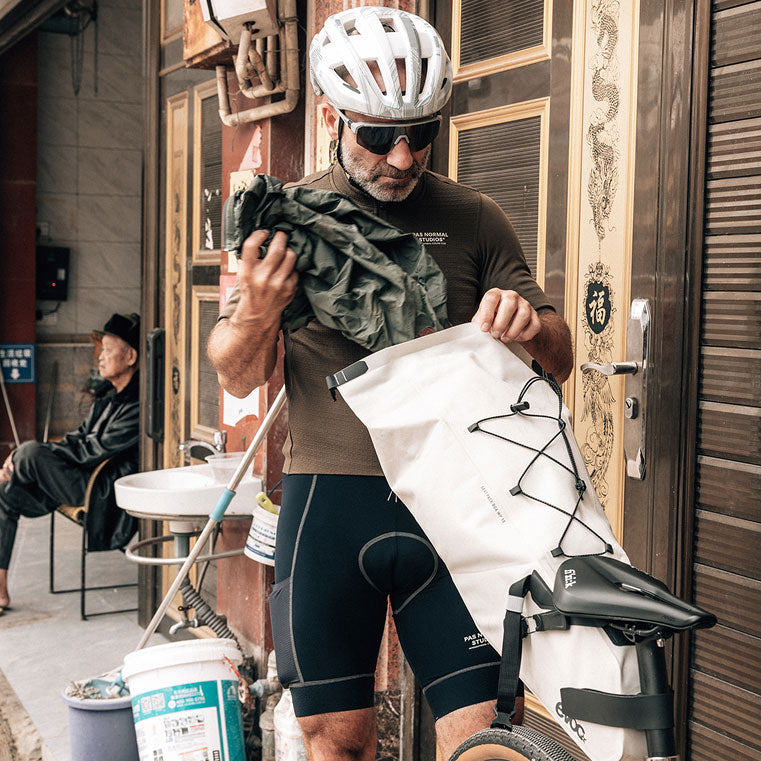
OUR BIKEPACKING SETUP
SEAT PACK WP
The essential bag in our setup.
This is where we store our spare clothing, an extra bib, rain jacket and rain pants – and, if needed, even a sleeping bag and tent. I usually pack up to four kilograms in here.
The "WP" stands for Waterproof. All bags carrying this label are fully welded, completely waterproof, and naturally dustproof as well.
Personally, I prefer rolling the closure upwards, as it gives me easier access while standing behind the bike – but that's purely a matter of preference.
The external cord system is perfect for stashing flip-flops after a long day in the saddle.
EXPLORE THE SEATPACKS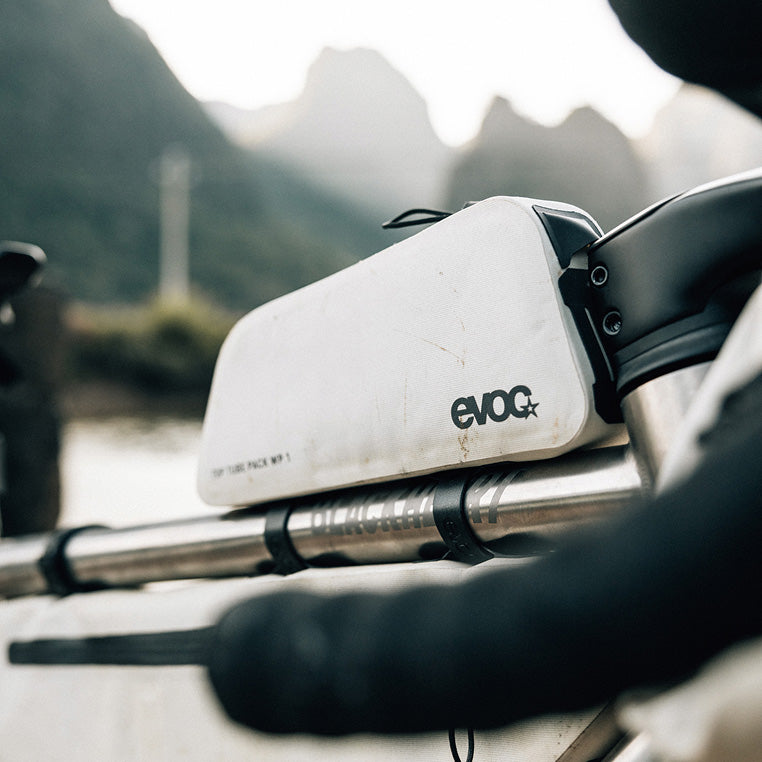
OUR BIKEPACKING SETUP
TOP TUBE PACK WP
My phone, power bank, snacks, and wallet all live up here.
One small tip: always make sure to tuck the zipper fully into the zipper garage. That's what keeps everything reliably waterproof.
SEE TOP TUBE PACKS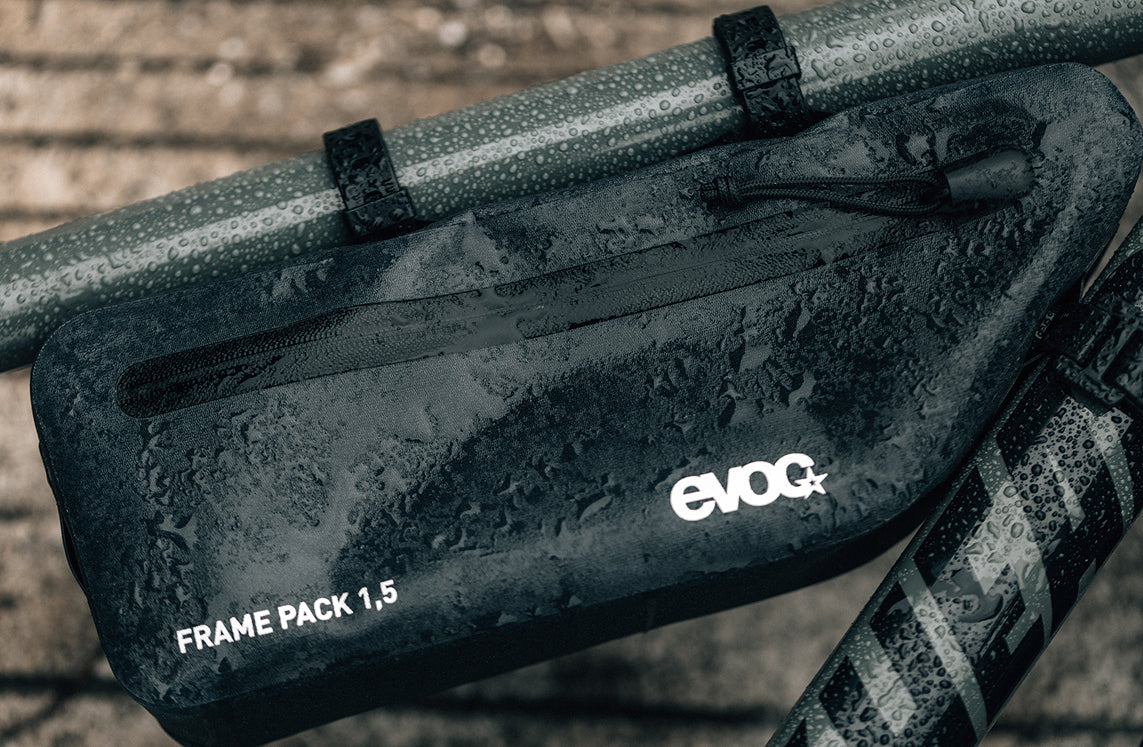
OUR BIKEPACKING SETUP
FRAME PACK WP
At the rear of the FRAME PACK, I always keep my first-aid kit. In front of that sits a small toiletry bag.
Depending on the weather, there's also space for snacks, a beanie, gloves, or an extra pair of glasses.
Our new TPU STRAPS secure the FRAME PACK firmly to the bike and integrate seamlessly with the TOP TUBE PACK above.
FRAME PACK WP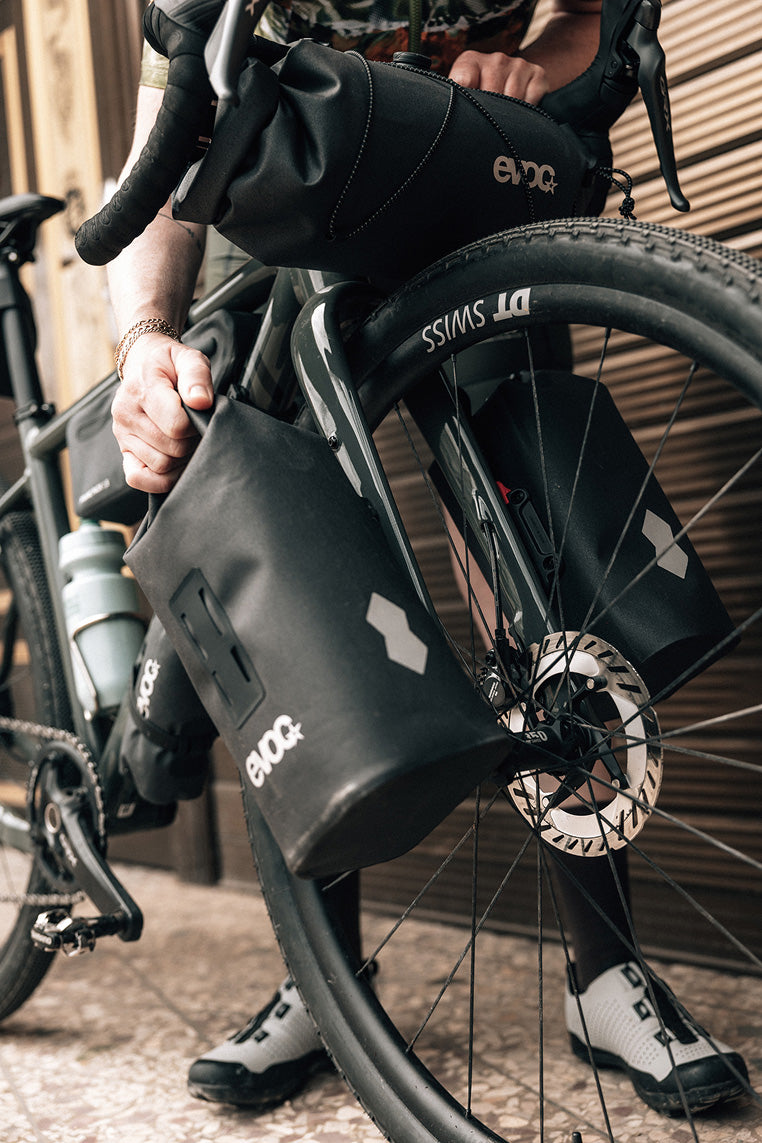
OUR BIKEPACKING SETUP
MULTI FRAMEPACK WP / FORK PACK WP / HANDLEBAR PACK BOA® WP
Kathi and I have slightly different packing preferences.
I like storing tools and spare parts in the MULTI FRAME PACK WP.
Kathi prefers the FORK PACK WP, which quickly clicks into place and offers additional space for cooking gear, cutlery, or even a sleeping bag.
One thing we absolutely agree on: the HANDLEBAR PACK BOA® WP is indispensable.
It makes optimal use of the available space on the bike and completes the perfect bikepacking setup.
SEE THE COLLECTION